 Schedule Services
 Free Estimate

You cleaned the glass, wiped everything dry with a microfiber towel, maybe even went back over it a second time. So why do your windows still look dirty?
Sometimes the answer is as simple as streaks from your cleaning products. Other times, what looks like normal grime might not be dirt at all. Before you reach for the glass cleaner again, here are some of the most common reasons your windows may still look cloudy, hazy, or spotted.
1. The “Dirt” May Be Between the Window Panes
This is one of the biggest causes of windows that look dirty no matter how many times you clean them. If you have double- or triple-pane windows, moisture can sometimes work its way between the panes when the window seal fails. That moisture can create a cloudy, foggy, or streaky appearance that looks a lot like dirty glass.
This can happen after windows are pressure washed, especially if high-pressure water is directed around the window seals and allows moisture to get between the panes.
The easiest way to tell is to clean both the interior and exterior surfaces. If the haze or moisture pattern is still there and appears to be inside the window, cleaning isn’t going to remove it. A failed seal is a window issue rather than a cleaning issue and may require repair or replacement of the insulated glass unit.
2. Hard Water Spots Can Stick Around After Cleaning
Those cloudy dots or rings on your exterior windows may not actually be ordinary water spots. Sprinklers, irrigation systems, and other water sources can leave minerals behind when droplets dry on the glass. Over time, those deposits can become increasingly difficult to remove with standard household cleaners. Jacksonville homeowners may also have to contend with exterior buildup from humidity, rain, and other environmental exposure.
Early hard water spots on windows may respond to the right cleaning method. But when mineral deposits sit on the glass long enough, they can progress from surface buildup to staining or etching. That’s one reason repeatedly spraying and wiping the glass may not make a difference.
3. Outdoor Residue Can Leave a Film
Sometimes a window isn’t visibly “dirty,” but it still doesn’t look clear. In our Northeast Florida climate, salt and other airborne debris can settle across exterior glass and create a thin film. When you add moisture, that film can smear rather than lift away, especially if you’re using the same cloth across several windows.
4. Your Glass Cleaner May Be Leaving Something Behind
One of the most common DIY window cleaning mistakes is assuming that more cleaner means cleaner glass. Using too much product can leave residue behind. Paper towels can also leave lint, while repeatedly wiping a drying cleaning solution around the glass can turn a small streak into a much bigger one.
Even household mixtures like dish soap and water can cause problems when too much soap is used, or the solution isn’t fully removed. For streak-free window cleaning, both the solution and the removal technique matter.
5. Some Marks May Be Damage, Not Dirt
If a cloudy area remains after surface deposits have been removed, the glass itself may have been affected. Mineral buildup can eventually lead to staining and, in more advanced cases, etching of the glass surface. Time, repeated exposure, and changing environmental conditions can make this damage more difficult to address.
At that point, another round of household glass cleaner won’t solve the problem. Specialized glass polishing may improve some mineral staining or surface damage, depending on the condition of the window. First Coast Home Pros can evaluate the glass and help determine whether you’re dealing with removable buildup or something that requires a more specialized solution.
What Does Professional Window Cleaning Do Differently?
The biggest difference between DIY and professional window cleaning is in the process.
A professional window cleaner can evaluate what is actually on the glass and choose the appropriate tools and cleaning solution for the job. At First Coast Home Pros, our window cleaning process includes careful scrubbing and professional squeegee techniques designed to remove the cleaning solution, dirt, and buildup rather than move it around the glass.
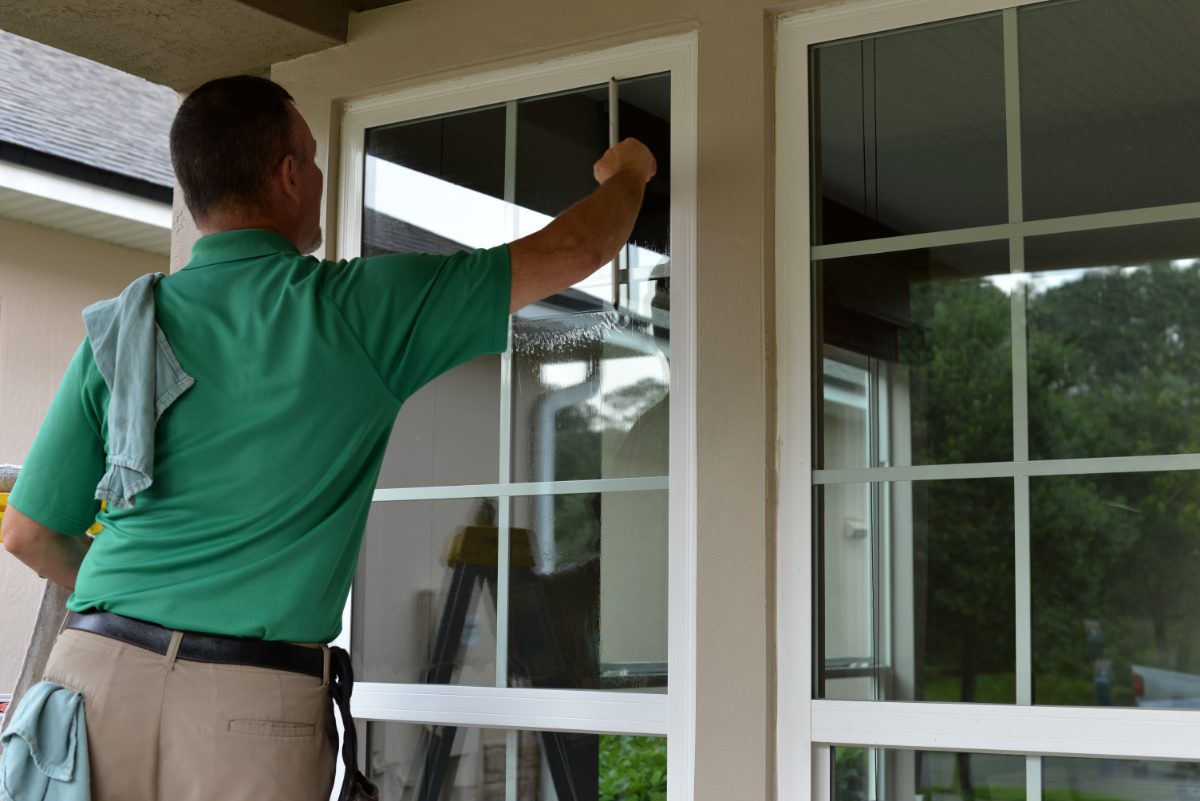
We also pay attention to the details around the window. Depending on the services you select, your visit can include:
- Interior window cleaning
- Exterior window cleaning
- Window screen cleaning
- Sills and frames
- High or vaulted windows
- Skylights and storm windows
- Specialty window styles
- Hard water stain removal and scratched glass repair
That means you aren’t left with clean glass surrounded by dirty screens or neglected areas that make the window cleaning look unfinished.
When Should You Stop Trying to Clean It Yourself?
For everyday fingerprints or light dust, regular household cleaning may be all you need. But it may be time to call a professional when:
- Windows still look hazy after both sides have been cleaned
- Hard water spots keep returning or won’t come off
- You see substantial exterior buildup
- Streaks remain after repeated cleaning
- You have high or difficult-to-reach windows
- You suspect the glass may be stained or etched
- You simply don’t want to spend your weekend cleaning every window in the house
And if the cloudiness appears to be between the panes, that’s useful information too! A professional cleaning won’t repair a broken window seal, but identifying the real problem can save you from repeatedly cleaning glass that was never dirty in the first place.
Let Us Take a Look
You don’t have to keep spraying, wiping, and hoping the next pass finally gets rid of the haze.
First Coast Home Pros provides window cleaning in Jacksonville for interior and exterior glass, specialty windows, screens, and more. We can help identify what’s on the surface, use the right cleaning approach for the buildup, and give your windows the detailed clean they need.
Frequently Asked Questions About Window Cleaning
Why do my windows look cloudy even after cleaning?
Cloudiness can come from surface residue, hard water deposits, pollen, mineral staining, or moisture trapped between panes. If both sides of the glass are clean but the haze remains inside a double-pane window, a failed window seal may be the cause.
How can I tell if a window is dirty or the seal is broken?
Clean both the interior and exterior surfaces and take another look. If fogging, condensation, or a cloudy pattern appears to be trapped between the panes, the insulated window seal may have failed.
Can professional window cleaning remove hard water spots?
It depends on how far the buildup has progressed. Some mineral deposits can be removed through cleaning, while more advanced staining or etching may require specialized glass polishing.